
Ikea
Discover how Ikea encourages sustainability among its employees: at work, at home and on the move.
From bus travel passes to solar panels: Ikea opts for a sustainable employee policy
The highlights of Ikea

100%
prepayment

293
travel passes vs. 50 company cars

2007
start of partnership with De Lijn
Position
Anja De Mol, country payroll specialist at Ikea is happy to take you through their story
Ikea stores are perhaps the prototypical warehouse store, located on a major road, close to a motorway exit and with a large car park. And yet Ikea is firmly committed to train, tram, bus and bicycle use, says Anja De Mol, country payroll specialist at Ikea. “Except in Arlon, all our stores are close to a bus or tram stop. The number of people arriving by public transport is on the rise, as is the number of cyclists.”
Public transport vs. company cars: 1-0
“Sustainable mobility is important to Ikea. For example, we are very sparing in our allocation of company cars, and at the same time we strongly encourage travel by bicycle and public transport.” Today 293 employees have a De Lijn travel pass, while only 50 people in the entire company have a company car. The ratio of De Lijn travel passes to company cars is about six travel passes to every company car. A figure that not every employer can boast of.
“Of course a lot of employees also commute in their own private car, especially the people who live far away, or the logistics team who cover the morning or evening shift. If you have to start work at 6 am, using public transport or cycling isn’t really possible.”
Everyone wins with the third-party payer scheme
“The more people use trains, trams, buses or bicycles, the fewer the traffic jams and the lower the level of air pollution.” The goal is clear: to get as many people as possible to travel by train, tram, bus or bicycle. And Ikea deliberately encourages this. “We work using the third-party payer scheme. This allows us to take all the burden off the employee. Employees don’t have to submit receipts, or pay anything in advance or pay any invoices. We arrange and pay for everything.” And it works. “It works especially well in the stores which have stops and stations close by and many good connections, such as Anderlecht, where the tram practically stops in front of the store.”
The third-party payer scheme is convenient for the employees, but also for Ikea. “We don’t need to worry about refunding receipts from each employee. Each month we receive one invoice, which is super simple. Our partnership with De Lijn has been going smoothly for ten years now. We are currently looking at whether we can also switch to the third-party payer scheme for tickets for occasional trips for meetings, so that we can have one central system there too, and get rid of all the receipts.”
The future is electric
The number of cyclists is also continuing to go up, encouraged by Ikea, whether they are using a traditional bicycle, an e-bike or a folding bicycle (used together with the bus or train). “All our stores have showers and changing rooms and we give the maximum cycling allowance. Wilrijk and Ghent have the largest number of cyclists, and it is no coincidence that these are two cities where traffic jams have got worse in recent years.”
And at Ikea, the future is electric. “In 2017, we organised a campaign where employees could try out e-bikes at work. Thanks to partnerships, they can also buy an e-bike of this kind (or a traditional bicycle) at a reduced price. And there will be charging points for e-bikes in all stores.”
Sustainability, at work, at home and on the go
Sustainability is important to Ikea. “We are trying to extend it into all areas of the company. This starts with a full reimbursement of the cost of De Lijn and NMBS-SNCB travel passes, but goes much further. For example, we were one of the first large companies in Belgium to invest in our own solar panels. Customers have recently been able to buy solar panels from Ikea, but we are definitely encouraging this among employees as well. They can buy solar panels more cheaply through a promotional offer. We have been focusing on LED lighting in our stores for a while, but are also encouraging this in employees’ homes. Our employees can buy organic food boxes at work. These are simply delivered to their homes. And each store has its own working group on sustainability. These are able to develop their own proposals.
Happy employees
Work-life balance is a hot topic, a buzzword, but above all an issue that many employers are sincerely concerned about, including Ikea. Van Mol: “The well-being of our employees is very important to Ikea. And of course commuting plays a role in this. Getting to and from work quickly and without stress is important. This gives people more time with their family, which makes them happy. And happy people stay with a company longer and are more productive: in short, happy people make a happy company.”
Benefits of collaboration with De Lijn at a glance
The simplicity of the third-party payer scheme
Excellent coordination with the De Lijn contact person
A component of Ikea’s promotion of sustainable mobility
About Ikea
About 4,000 people work at Ikea, across the eight stores in Belgium: Anderlecht, Arlon, Ghent, Hasselt, Hognoul, Mons, Wilrijk and Zaventem. You can find everything for the home in their stores, always with high-quality design, and at an affordable price.
Find out more at www.ikea.be.

A customised proposal for your organisation
Would you like to know exactly how economical your employees’ commuting could be? Request your quotation now.
Request for third-party payer agreementDiscover other case studies
Are you curious to see the results that other organisations have achieved?
Your options
There are various options available to you as an organisation to offer your employees appropriate and affordable public transport.
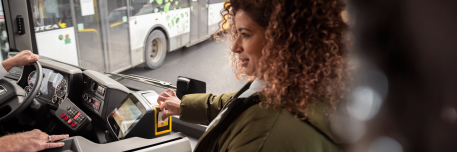
Contribution towards travel pass
Do you want to reduce your (mobility) costs but without lots of extra administration? Use contributions for travel passes.
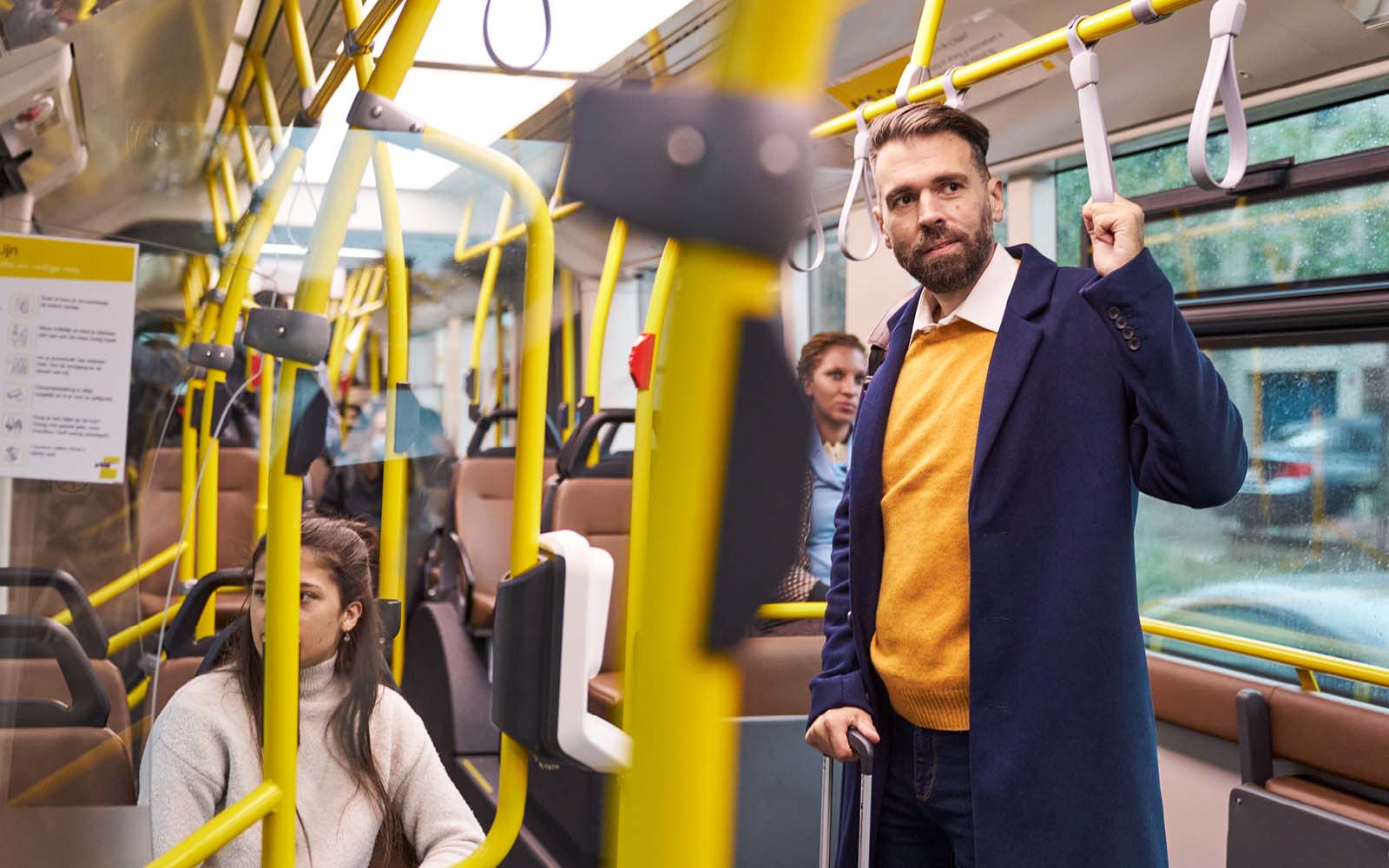
Intervention in the 10-journey ticket - Business
Do your employees commute to work 1 to 2 times per week or do they frequently have business trips? Then the business 10-journey ticket is the solution: a flexible and cost-effective travel ticket.
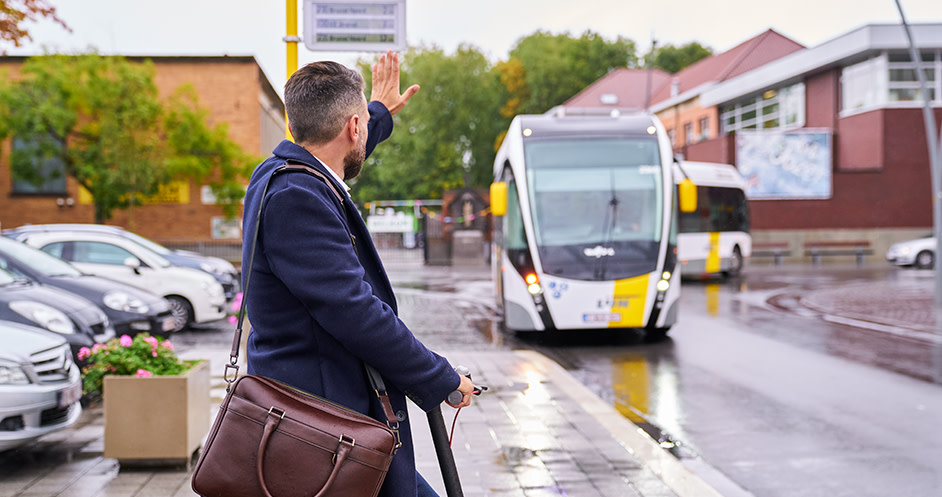
Intervention in the 50-journey ticket - Business
Do your employees travel to and from work an average of 2 to 3 times per week? Then the 50-trip card is really something for them(*). With this flexible and affordable ticket, they can travel for 3 months, wherever and whenever they want.
Contribution for tickets
Not all your employees travel to work the same way every day. Sometimes they make business trips by car, and sometimes they use public transport. A flexible pattern of mobility like this requires a flexible solution.

Tickets via the app
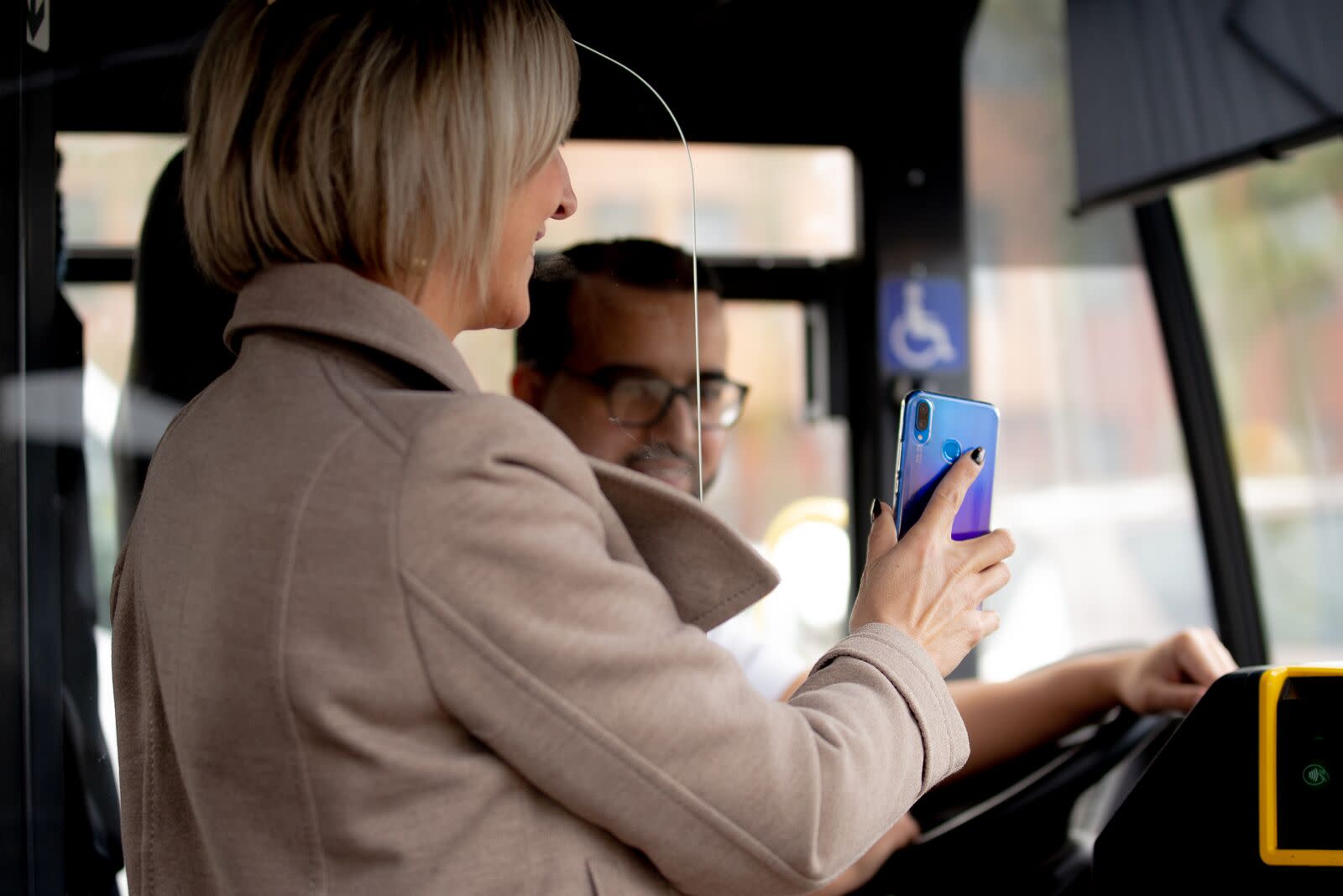
Easy and cheap: that is what the digital ticket is all about. This digital ticket is the cheapest way of paying for a single journey by bus or tram. Your employees request an ticket using the app, and you pay the invoice afterwards.
We’ll be happy to help
 dienst.verkoop@delijn.be